















Over the last five years, the office market has moved into a more considered phase. Recent market data shows that big six city-centre take-up reached 4.36m sq ft in 2024, its highest level since 2019 while out-of-town regional markets have remained materially weaker. That contrast suggests the rebalancing of demand has been uneven, with occupiers reassessing early hub strategies as they recognise the operational and cultural limitations of highly distributed estates.
Central locations are being increasingly valued for their connectivity and commutability. Put simply, most people can get into a city centre, but not everyone can reach an out-of-town business park as easily. City centres benefit from stronger public transport links, making them more practical meeting points for diverse, geographically dispersed teams.
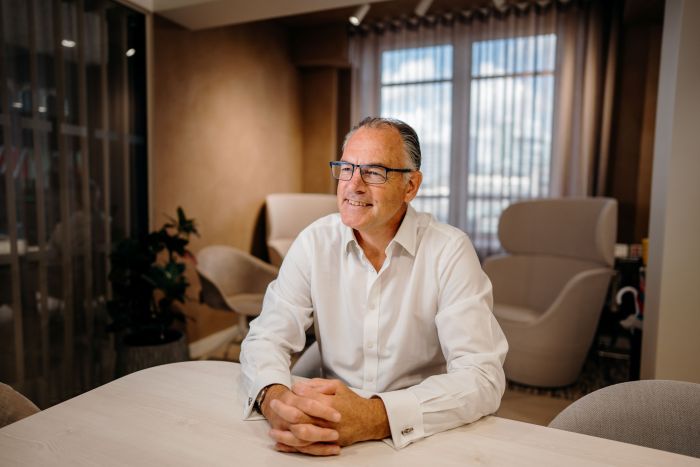
David Laws, Head of Office and Business Space at leading property consultancy Fisher German, explains that occupiers are focusing on fewer, higher-quality workplaces that get the basics right and provide value and purpose for their business and people:
Accelerated remote working has now become the norm for many, forcing organisations to rethink the scale, shape, and geography of their estates.
Many have downsized their central headquarters while adding satellite offices in suburban or out-of-town locations to reduce costs, ease commuting pressures and provide flexibility for a dispersed workforce.
As time has passed, it appears this model might permanently redefine office demand. The assumption being that if work could happen anywhere, then it would naturally drift away from traditional city centres towards regional markets, business parks and lower-cost suburban locations.
But several years on, the reality is proving more complex. While these strategies addressed immediate operational needs, they have also created unintended consequences.
Fragmented teams, duplicated operational costs, inconsistent workplace experiences and increased estate complexity are now common challenges.
As organisations gain deeper experience of hybrid working, a recalibration is underway. Rather than abandoning flexibility, occupiers are refining how space is used and where it is located.
Increasingly, city-centre offices are being repositioned not as everyday workspaces, but as strategic destinations. This is not a return to old norms, but a recognition that central locations still offer advantages that distributed models struggle to replicate.
Connectivity sits at the heart of this shift. City centres provide the transport infrastructure that makes offices commutable at scale, enabling organisations to draw from wider talent pools and bring teams together efficiently when needed. In many cases, it is not the destination that discourages attendance but the commuting experience itself, from overcrowded trains to delays and unreliable services. If policymakers want to support greater return-to-office momentum, improving transport infrastructure and day-to-day network reliability will be a key part of the equation.
Equally important is the wider urban ecosystem. Retail, hospitality, leisure and cultural amenities have become central to employees’ experiences.
When the office is no longer a daily obligation, it must justify the commute and encourage meaningful, intentional attendance.
Talent dynamics are reinforcing this trend. In competitive labour markets, a well-located, high-quality city office remains a powerful signal of organisational intent. It supports recruitment and retention while also enabling mentoring, onboarding and informal learning which rely heavily on proximity and spontaneous interaction. These qualities are significantly harder to sustain in fully remote or highly dispersed environments.
Importantly, this evolution does not signal a retreat from flexibility. Hybrid working is now firmly embedded across most sectors, but expectations have matured. There is greater acceptance that one solution does not provide for everyone.
This shift is reshaping demand across the market. Occupiers are consolidating into fewer locations but demanding higher quality in return.
The focus is moving towards “clubhouse or community” workplaces where environments combine collaboration, focused work and social connection in a single, flexible setting.
For landlords and developers, this raises the bar significantly. Flexibility, sustainability and adaptability are now essential. Buildings must be capable of evolving with changing workplace strategies while also meeting rising expectations around environmental performance and digital infrastructure. Strong ESG credentials are no longer optional because they are increasingly tied to both lease demands and long-term asset value.
Occupiers also expect environments that actively support productivity, wellbeing and culture through a thoughtful mix of collaborative zones, quiet areas, reliable meeting facilities and informal social spaces. The most successful buildings are those that integrate these elements seamlessly, supporting multiple modes of work throughout the day.
Office decisions are increasingly made at portfolio level, with greater scrutiny applied to location, utilisation and quality. Rather than focusing on cost or square footage alone, organisations are aligning workplace strategy more closely with performance, culture and talent outcomes.
Ultimately, the office market is settling into a more mature phase. The early experimentation with decentralisation has given way to a clearer understanding of how hybrid working functions in practice.
City centre offices are reasserting their relevance not as the only model, but as a strategically important one which are valued for their ability to bring people together in ways that the alternatives can’t match.
The result is a more selective market. Success now depends on informed, asset-specific and organisation-specific decisions about space. In a hybrid world where every journey into the office must be justified, the winners will be those that deliver measurable value, purposeful experience and a clear reason to come together.