










Manufacturers across the West Midlands are bracing themselves for an uplift of up to 30% on their Business Rates when new bills land in March.
Business Rates are a tax on the occupancy of commercial property, including shops, offices and industrial/warehousing space. The tax is based on the value of the property at a fixed valuation date (Rateable Value/RV). A Uniform Business Rate (UBR), or multiplier, is then applied.
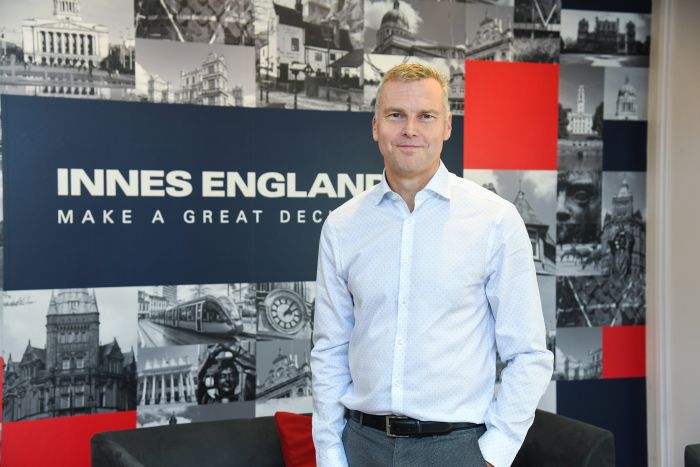
According to Tim Ford, a director in the professional services team at the Birmingham office of property consultancy Innes England, changes to the Business Rates regime, introduced in the Budget late last year, are already starting to unravel.
He said: “The new rules are designed to target online giants such as Amazon, who pay proportionately less in Business Rates than their High Street counterparts occupying smaller, but higher value, properties. However, in attempting to address this apparent iniquity for retailers, the Government has dragged other businesses, including manufacturers, into the fray.”
The changes see five new tiers of multiplier taking effect from April this year, from 38.2p for retail/leisure occupiers with a RV less than £51,000, to a large property multiplier of 50.8p on properties with a RV in excess of £500,000.
Ford said: “What this and recent increases in rent mean is a medium-sized manufacturer occupying a 50,000 – 100,000 sq ft premises in Aston, will see a 31- 98 per cent uplift in their Business Rates from April, before Transitional Relief.
“To mitigate against the rises, the Government is providing some Transitional Relief. For businesses with a rateable value of more than £100,000, the increase will be capped at 30% for the first year. From April 2027-29 this will be 25% + inflation each year, after which full rates will apply.
“This is a shocking sum for businesses to absorb at short notice, particularly when they are already reeling from hikes in Employer’s National Insurance and run-away energy costs. With the West Midlands boasting the highest concentration of manufacturing of any UK region, it’s a body-blow for the local economy.”
Ford said: “The Chancellor has been quick to laud these transitional arrangements, along with the 12% drop in UBR for smaller retail and hospitality occupiers. However, she neglected to mention the removal of rates relief of at least 40% introduced when the pandemic hit. As soon as this sank in, pub operators began a high-profile campaign objecting and appear likely to win concessions from the Government.”
But while this is good news for the hospitality sector, it exposes the fundamental imbalances that remain with Business Rates and does not help manufacturers, who did not benefit from Covid reliefs, and are now facing increases in rateable values of 35-55% and have not been able to mobilise to lobby their MPs.
Ford added: “The Government is battering the very businesses it needs to drive much-needed economic growth, at the same time as creating upward pressure on inflation from manufacturers, supermarkets and other retailers who will be forced to put up prices.
“Since 1990 the standard rates multiplier has increased from 38.4p to 48p, equivalent to an increase in basic rate Income Tax to 27.5% over the same period. Business Rates income has increased ahead of inflation irrespective of economic reality. Successive Chancellors have become reliant on this tax as – until the pubs campaign – it comes with limited electoral risk.
“The pub sector has eloquently exposed the real and substantial consequences that extortionate Business Rates mean for businesses. There needs to be a fundamental reset to the taxation of the business community rather than further tinkering with a dysfunctional system that jeopardises economic growth.”